
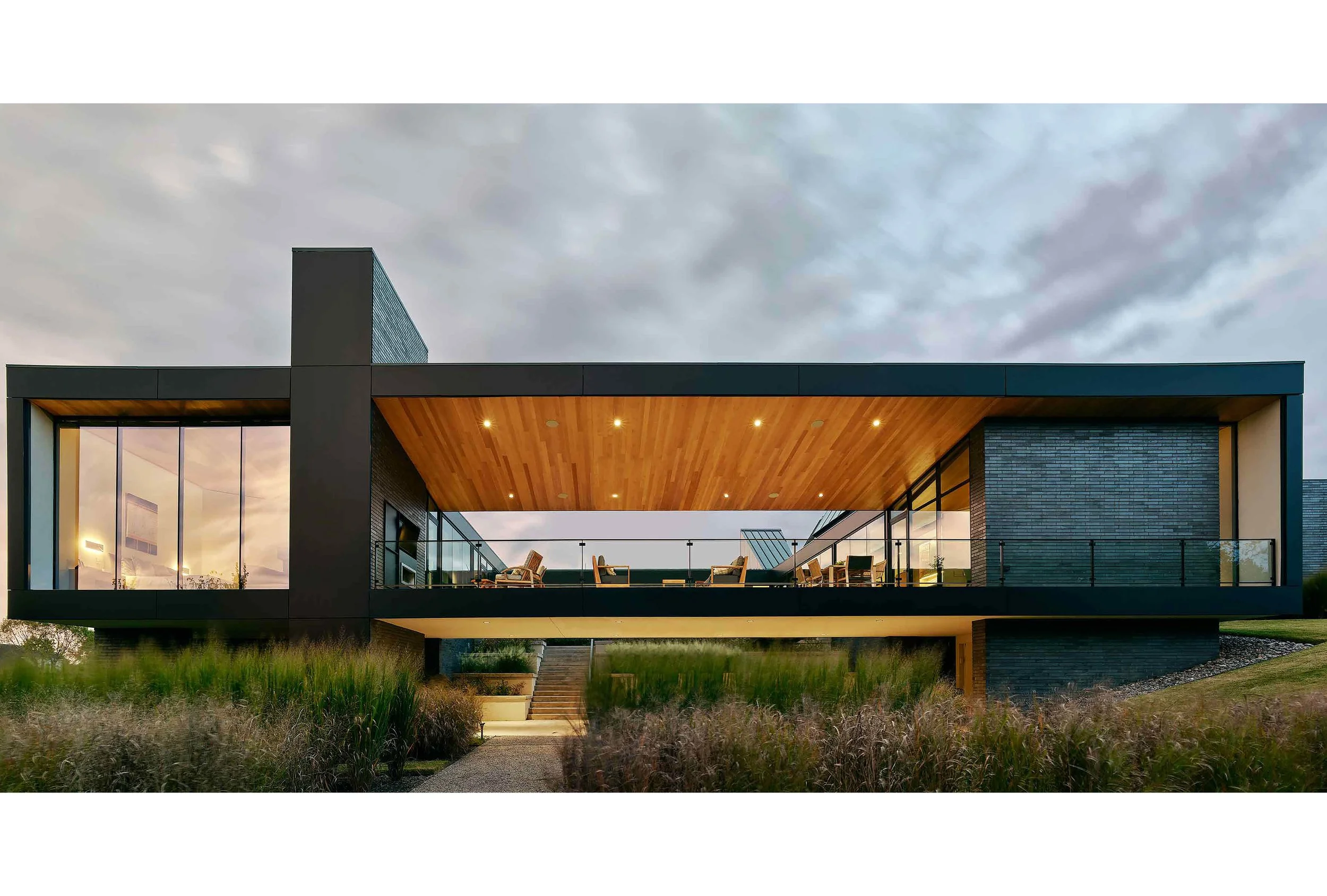
Marlon Blackwell — Architects
Beneath its graceful simplicity, the Shaw Residence is also a model of sustainability. A geothermal system provides highly efficient heating and cooling, while advanced insulation, a radiant concrete slab, highefficiency lighting, and water-saving plumbing fixtures ensure an environmentally responsible footprint.
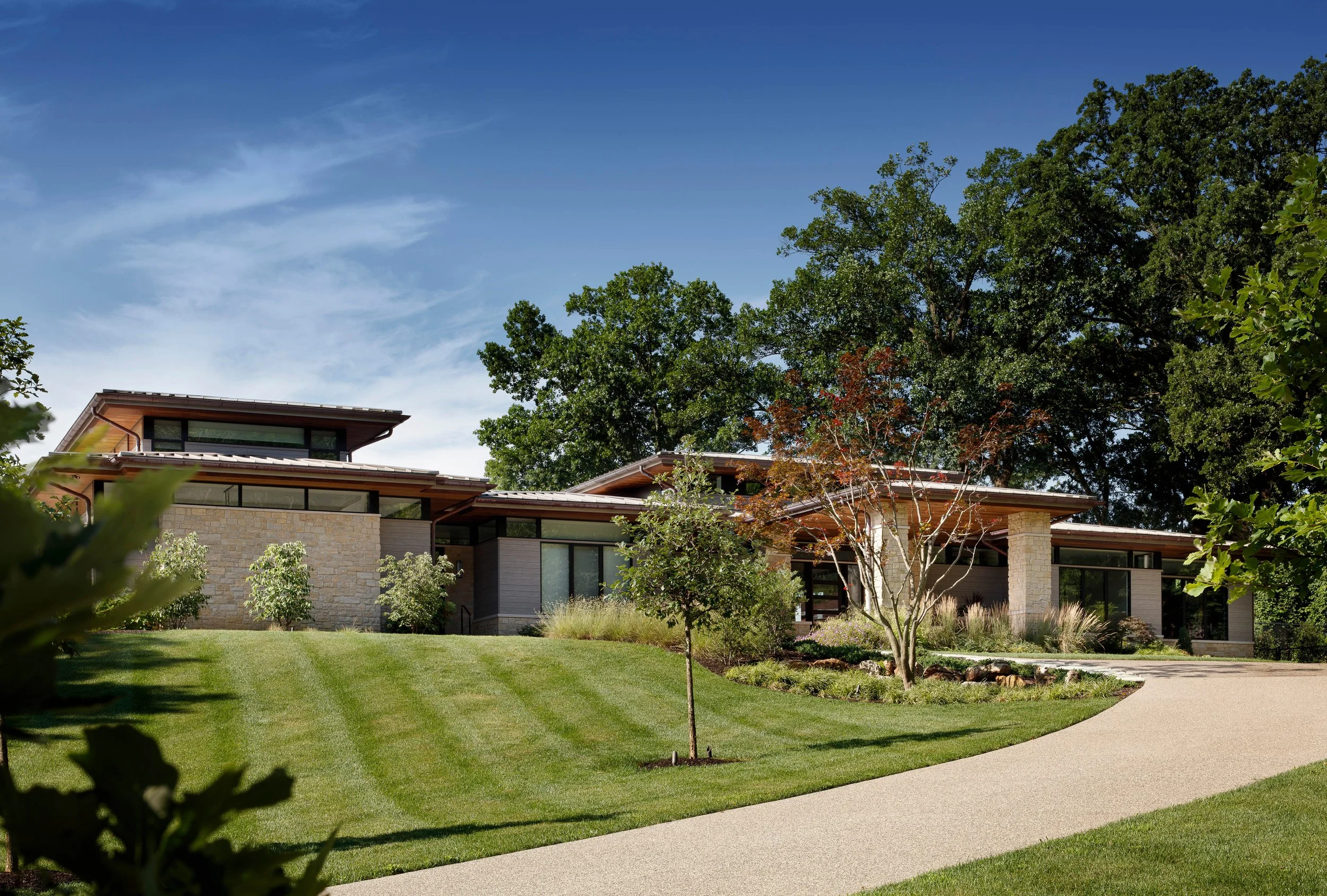
Kurt Zobrist — Architects
At the home’s heart is a two-story gathering room with warm wood-toned ceilings that foster an intimate yet spacious atmosphere. Unique design elements, such as hidden trim to highlight the owners’ copious art collection, reflect a balance between functionality and aesthetics.
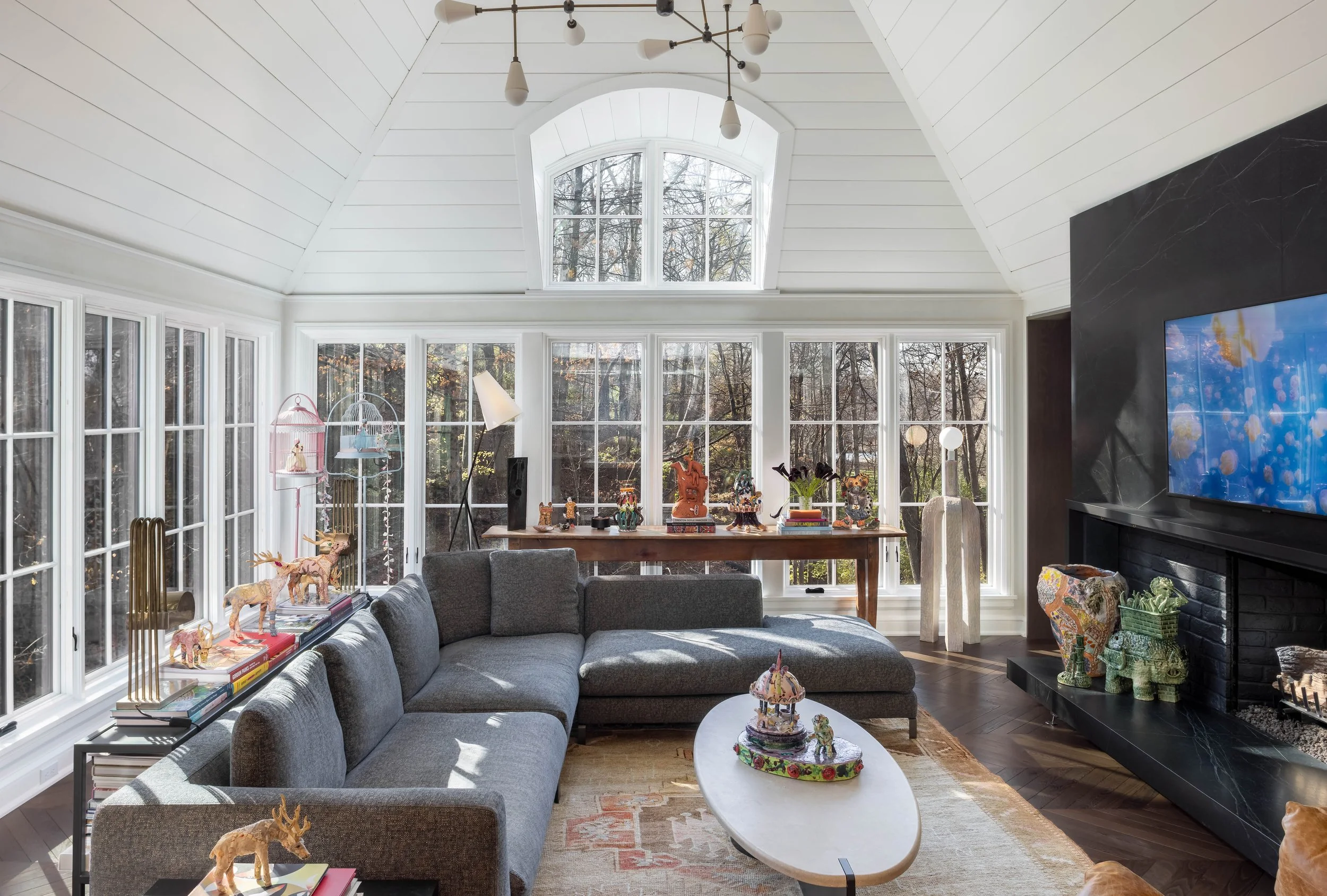
Nathan Sampson — Architects
Designing a home that seamlessly integrates an extensive art collection presented unique challenges. The team’s technical expertise came to the fore, with careful planning of wall spaces, lighting, and mechanical systems to showcase the art without disrupting functionality.
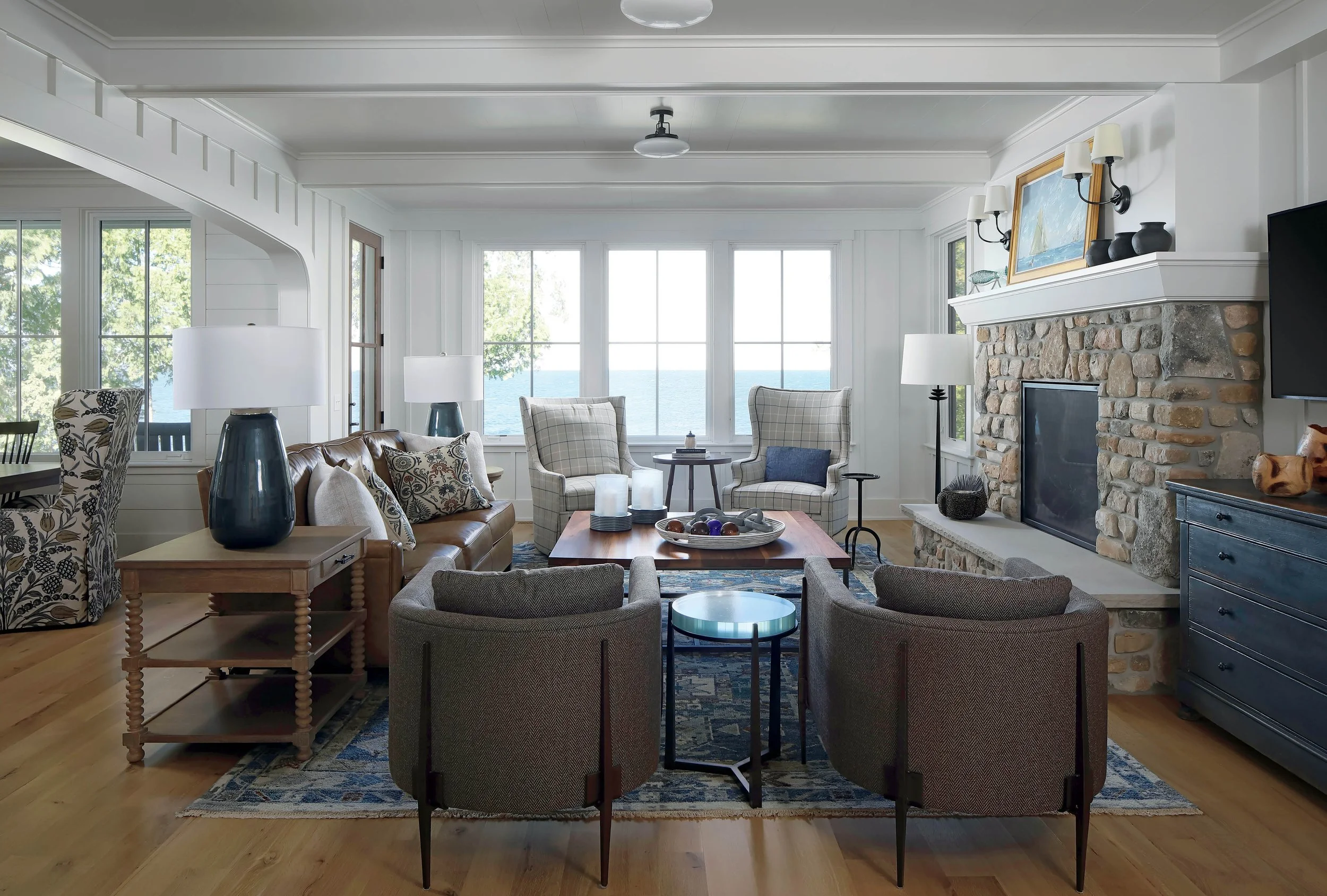
Melissa Destree — Architects
For the homeowners, a separate entry through a lightfilled mudroom provides easy access to the kitchen pantry and dishroom, making daily life more functional and efficient.
Tim Maddox — Architects
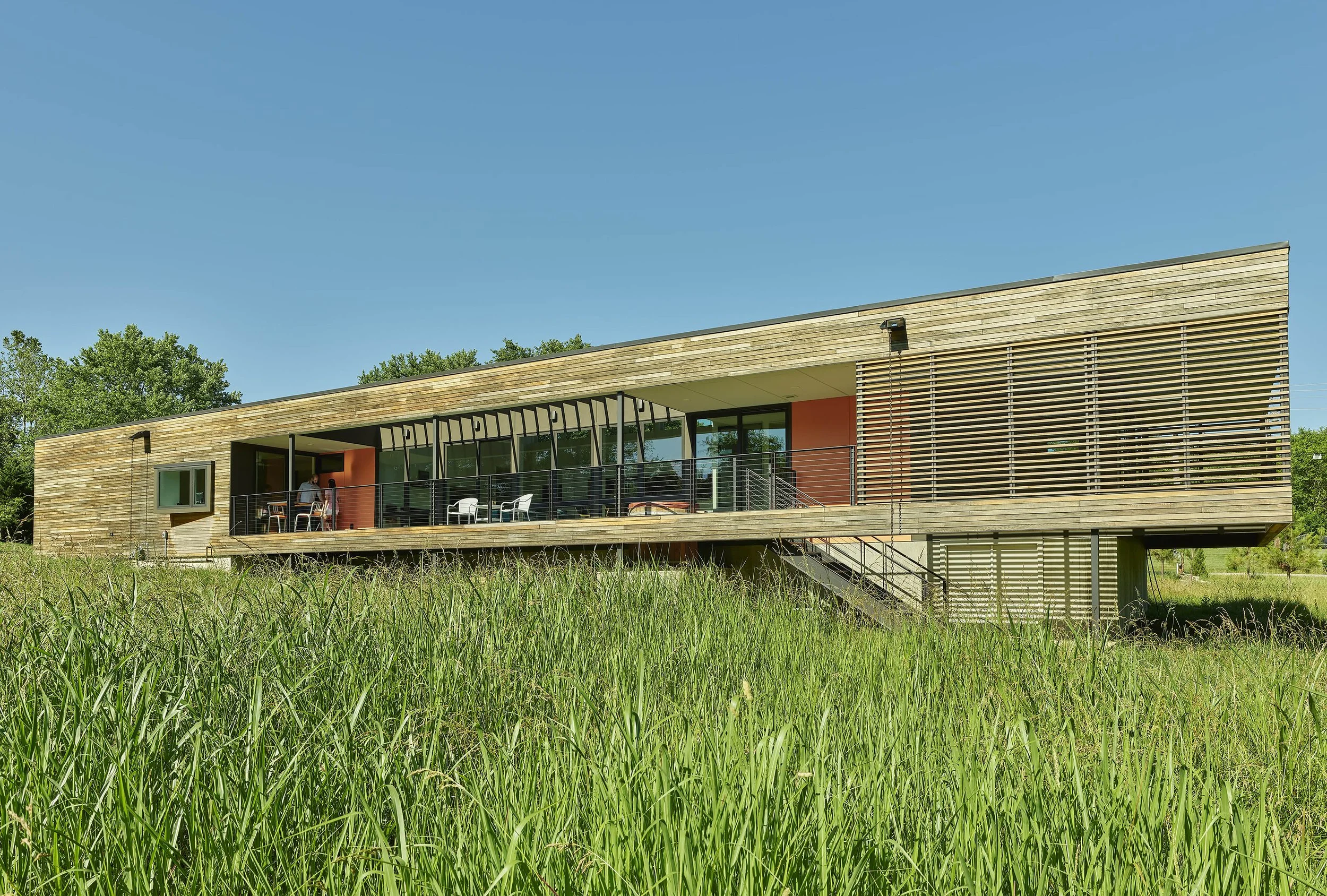
Sustainability is inherently woven into the design, with the home’s layout based on a four-foot grid system — an approach historically used by architects like Frank Lloyd Wright and his disciple, renowned Fayetteville architect E. Fay Jones.
Brian L. Freese — Architects
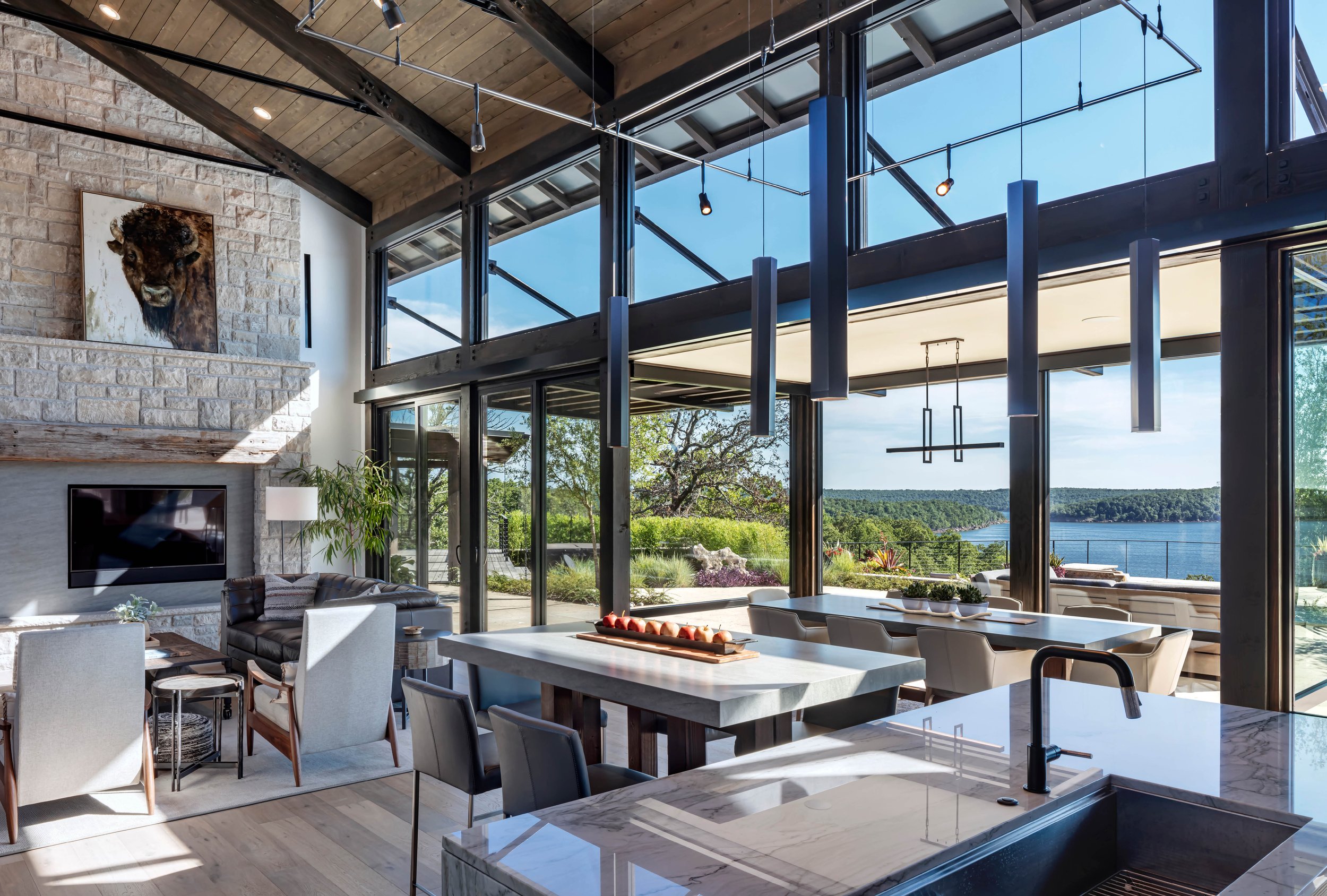
Inside, the home reflects a perfect balance of modern design and historical connection. Reclaimed, centuryold oak beams from a family barn were repurposed as fireplace mantels, adding a deeply personal touch to the otherwise clean, contemporary aesthetic.
Thomas Shafer — Architects
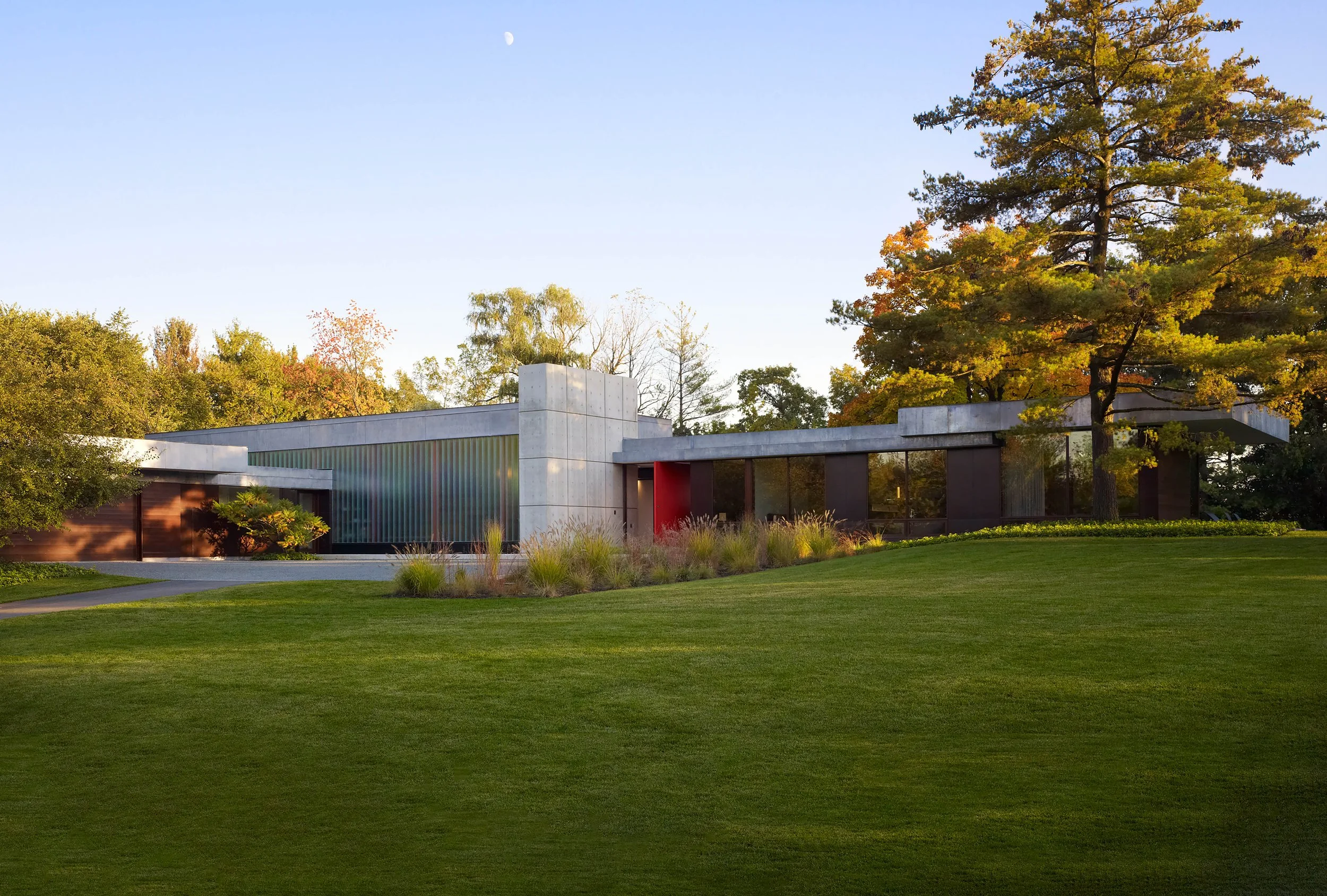
The second pavilion houses the primary suite which is slightly elevated to follow the natural slope of the land, whereas the third pavilion is dedicated to guest accommodations — spaces to lounge, daydream, or retreat for rest — and houses a fitness area that opens directly to a midnight blue swimming pool.
Robert Srote — Architects
The kitchen offers a bold contrast in a graphic black-and-white palette. Dual islands form the heart of the space, paired with a custom mural backsplash from Italy that serves as both art and focal point behind the cook range. A sculptural grid light fixture — painted to match the walls and suspended from brass straps — mirrors the geometry of the room while echoing the brass accents of the custom range hood.
Brad Douglas Tilma — Architects
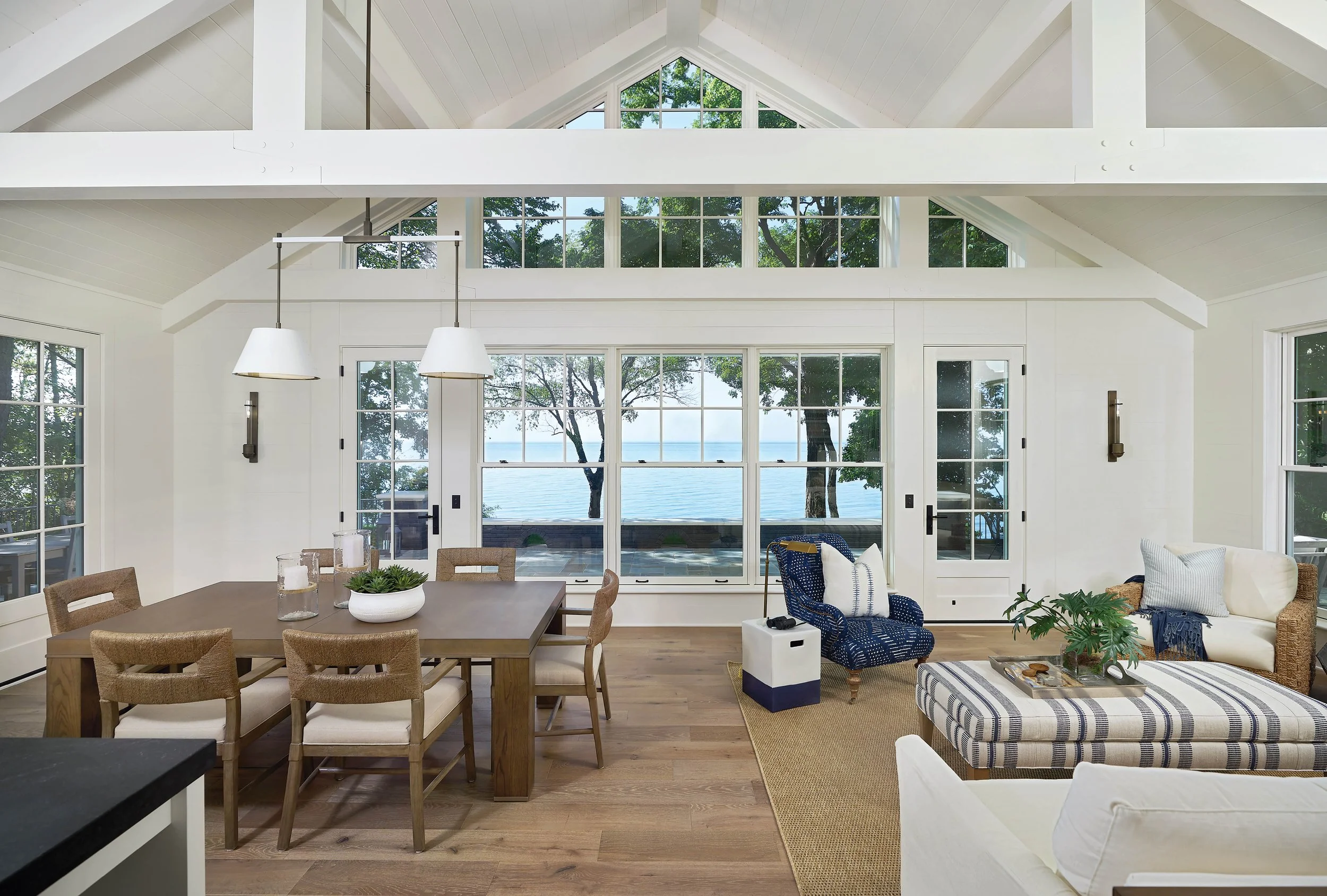
Camp Paddleton balances practicality with artistry, creating a space that flows naturally while showcasing innovative design choices. The great room, with its vaulted ceilings, classic porthole window, and expansive glass walls, was designed first to anchor the home and connect it to the stunning lakeside views. Intimate spaces, like the second-story den, provide cozy nooks for quiet moments, proving that a well-designed home combines functionality with comfort.
Nick Liebler — Architects
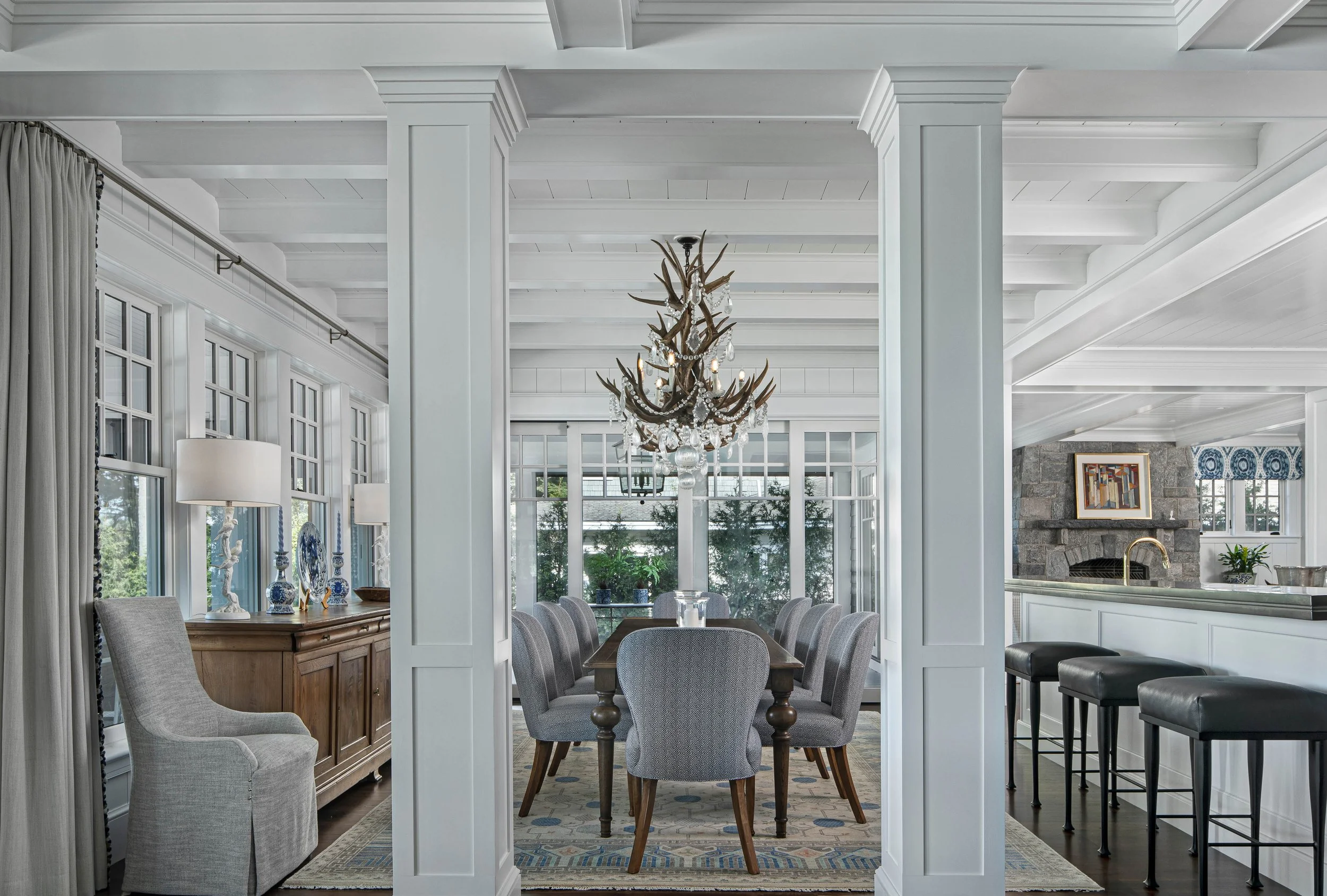
At its core, Hemlock Point Cottage was designed as a retreat for family gatherings, a place where summers on the lake could be cherished for generations. One of the home’s most beloved spaces is the screened lakeside porch, which has become a favorite for dining, entertaining, and quiet moments of reflection by the fire as the sun sets over Walloon Lake.
Clete Kunce — Architects
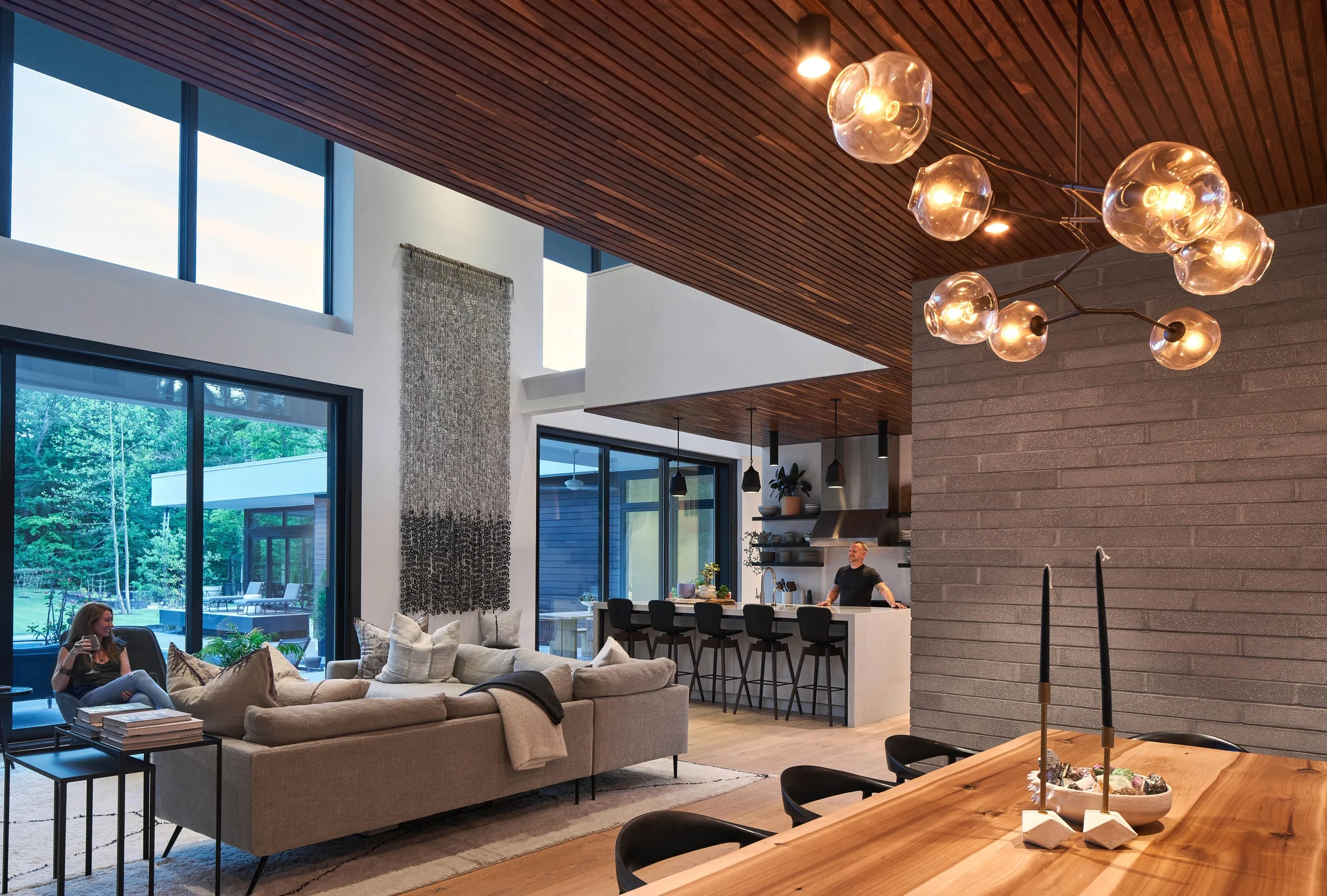
A dining room, set off from the main living area, features lowered ceilings to create an intimate, cozy space — this area quickly became a favorite spot for family meals and meaningful conversations.

Eric De Witt — Architects
The owners of Hidden Lakes, embarking on their first custom-built home, envisioned a one-of-a-kind residence that would stand as a testament to their dreams and values. As the owner of a window company, their passion for showcasing glass as a design element is evident in the home’s breathtaking transparency and light-filled interiors.

Brian Neeper — Architects
A central staircase rises into a tower-like form at the front of the house, allowing western light to flood into the family room and main living areas. Upstairs, a loft space at the top of the stairwell doubles as a study and informal family gathering area, fostering connectivity and warmth.

Jeremy Perkins — Architects
The private spaces, including two guest suites, exist upstairs at the ends of the U-axis to create a sense of destination. No matter where you are in the house, the intentional lines of sight are made even more stunning by the owners’ impeccable art collection, carefully curated by their daughter.

Robert Sears — Architects
That incredible view and easy access to the beach took top priority at each step of the design process. As this active family engages with the outdoors — the lake, the pool and its deck, an outdoor kitchen — on a daily basis, a constant connection to nature was imperative.

Jeff Visser — Architects
Entertaining is also important to the owners, who are quite active and try to enjoy their gorgeous surroundings as often as possible.

Dan Nepp — Architects
But the process wasn’t without its challenges. One notable land constraint was a sacred Native American mound, now around which a dark stone retaining wall gracefully arcs, accompanied by a circle of smaller shade trees to ensure that this historical element remains an integral part of the landscape.

Gary Beyerl — Architects
One unexpected favorite feature is the morning kitchen, a space originally intended for small appliances, catering, and bar service. Over time, it has become a highly functional and well-loved part of the home, proving the success of the thoughtful design.

Greg Vose & Mike Gray — Architects
Functionality meets playfulness throughout the design. An expansive, three-sided screened porch with operable screens and a wood-burning fireplace serves as a yearround gathering space, while an indoor sport court and gym provide opportunities for recreation during Minnesota’s long winters and buggy summers.

Brent Nelson & Chad Healy — Architects
The Mill District in Minneapolis pays homage to the neighborhood’s famous past, when it reigned as the flour capital of the U.S. from 1880-1930.